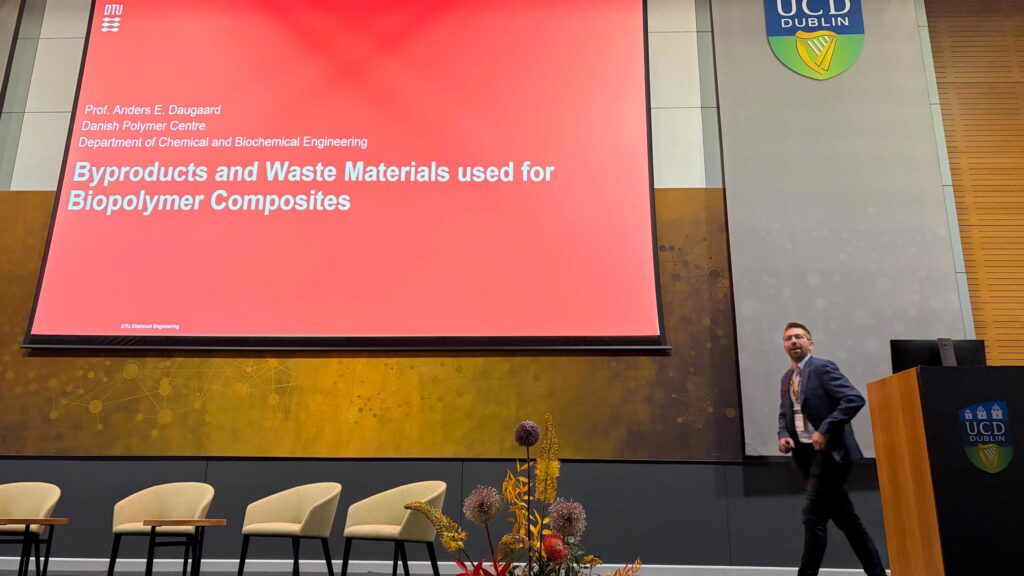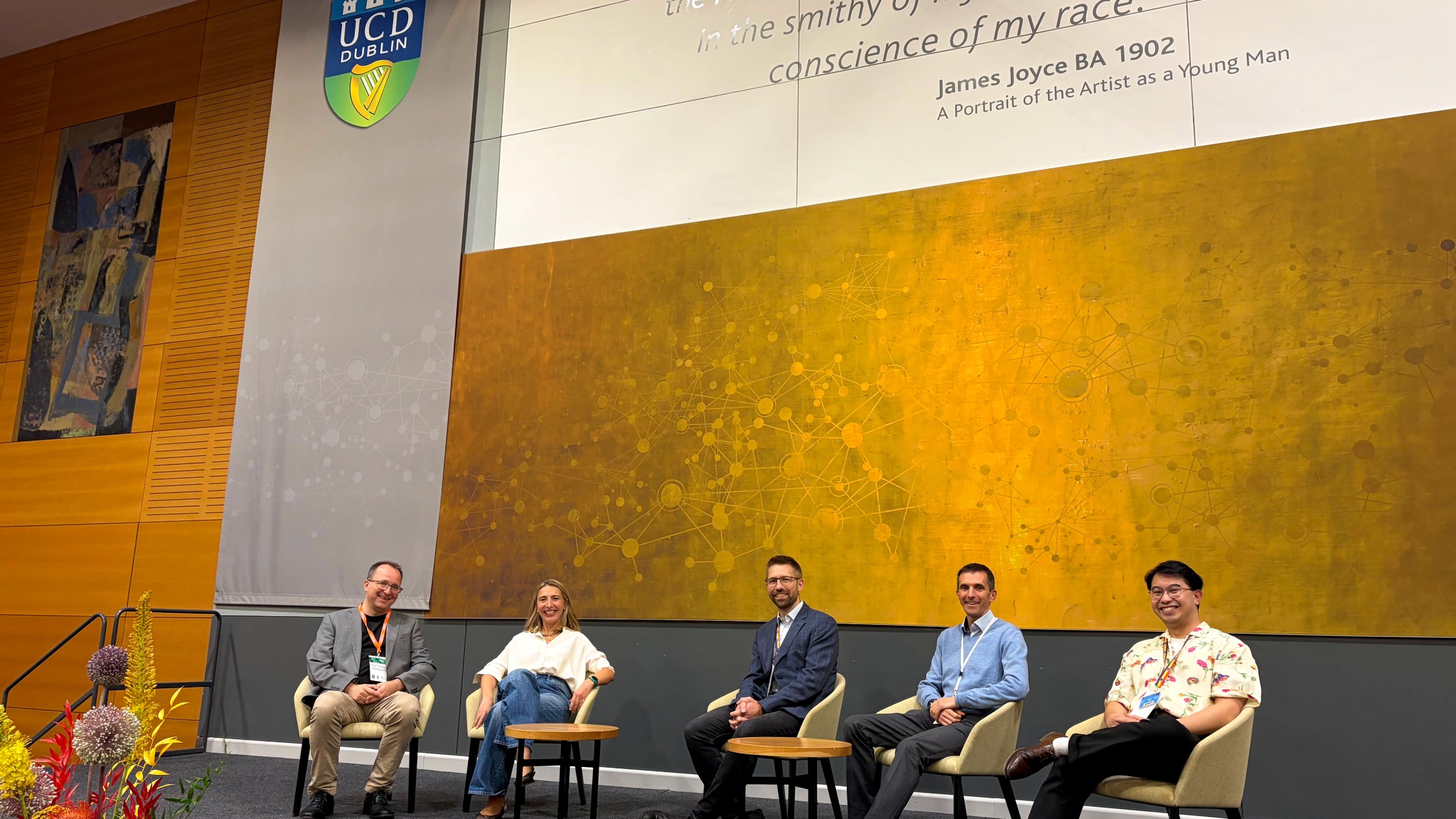
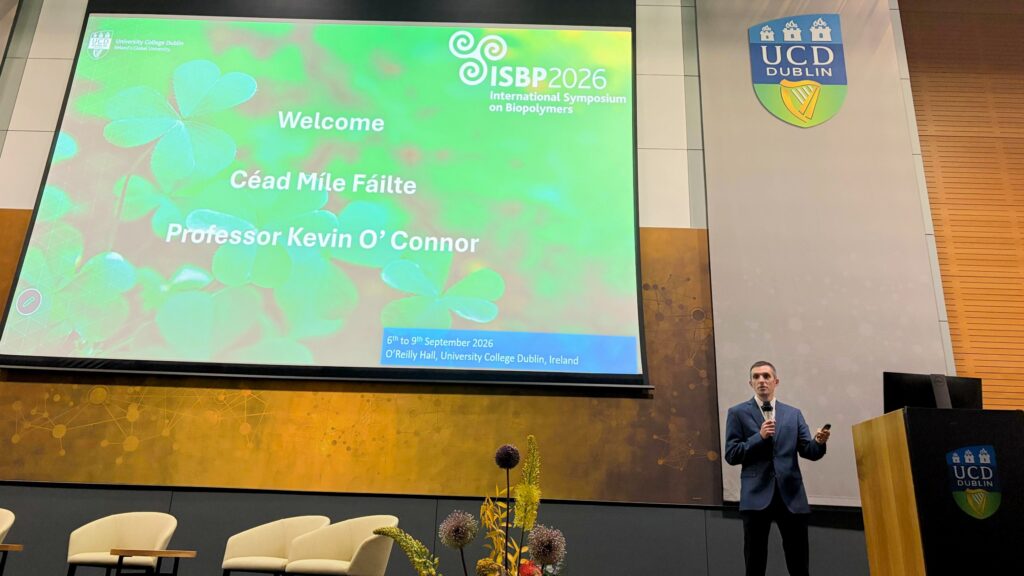
From 6 to 9 September 2026, the 20th International Symposium on Biopolymers (ISBP 2026) brought the biopolymer community to Dublin, Ireland. Organised by UPCYCLE partner University College Dublin (UCD), the symposium gathered more than 170 delegates from 25 countries, bringing together expertise from research, industry, and policy.
Over four days of presentations, poster sessions, and networking activities, the programme followed biopolymers across the entire value chain, from production and processing to end-of-life considerations. UPCYCLE partners contributed from several angles, reflecting the project’s multidisciplinary approach to circular and sustainable packaging solutions.
From waste streams to recycled polyesters
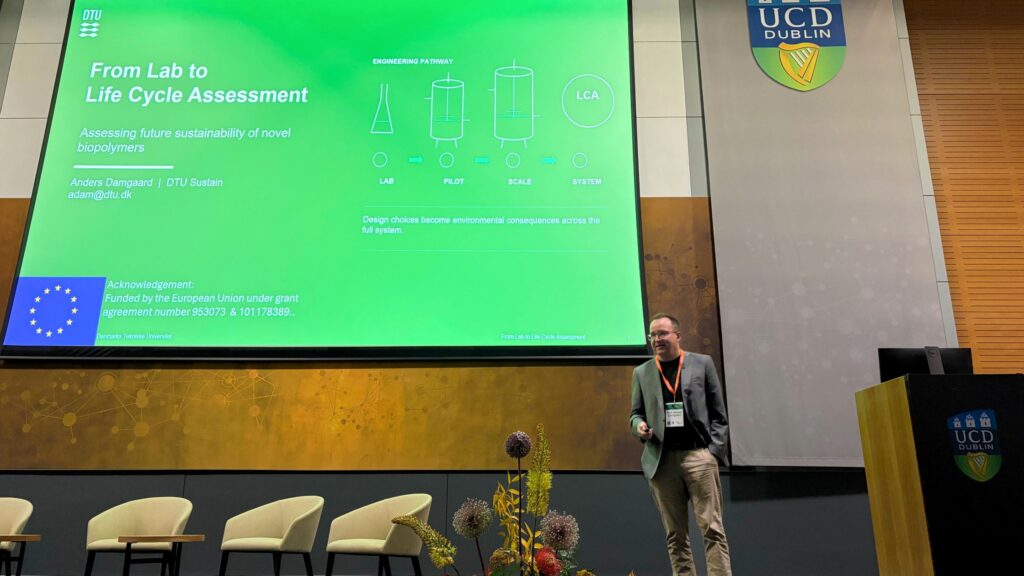
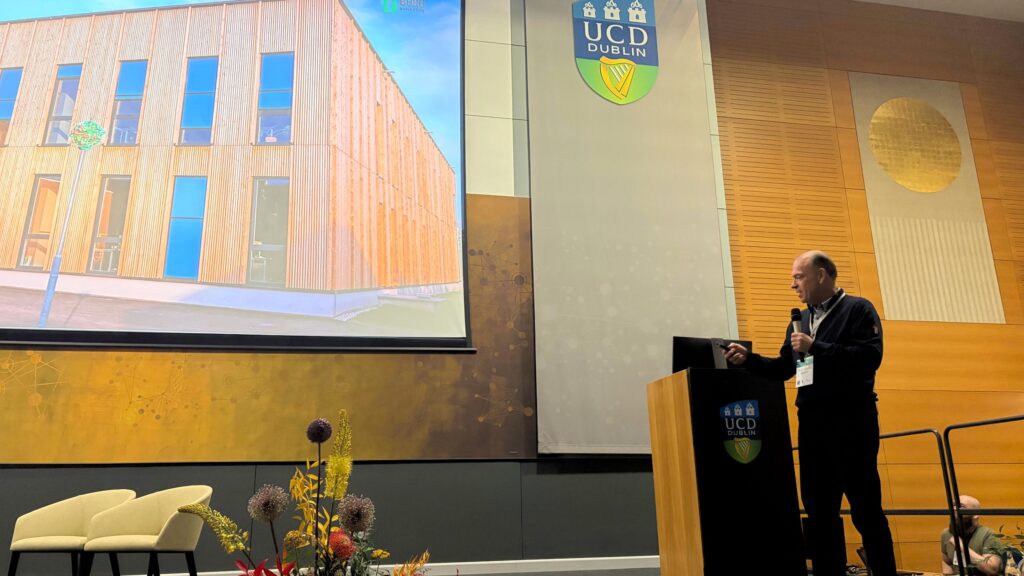
Representing Technical University of Denmark (DTU), Anders Egede Daugaard presented how by-products and waste materials can be incorporated into biopolymer composites, demonstrating how underused resources can become valuable components in new material applications. His colleague, Anders Damgaard, approached the topic from a sustainability perspective, showing how life cycle assessment can help anticipate the environmental performance of novel biopolymers before they reach the market.
Georg Gubitz from BOKU University shared work on the enzymatic recycling of circular polyesters, highlighting how biotechnology can help break down used materials so their building blocks can be recovered and reintroduced into new polymer systems.
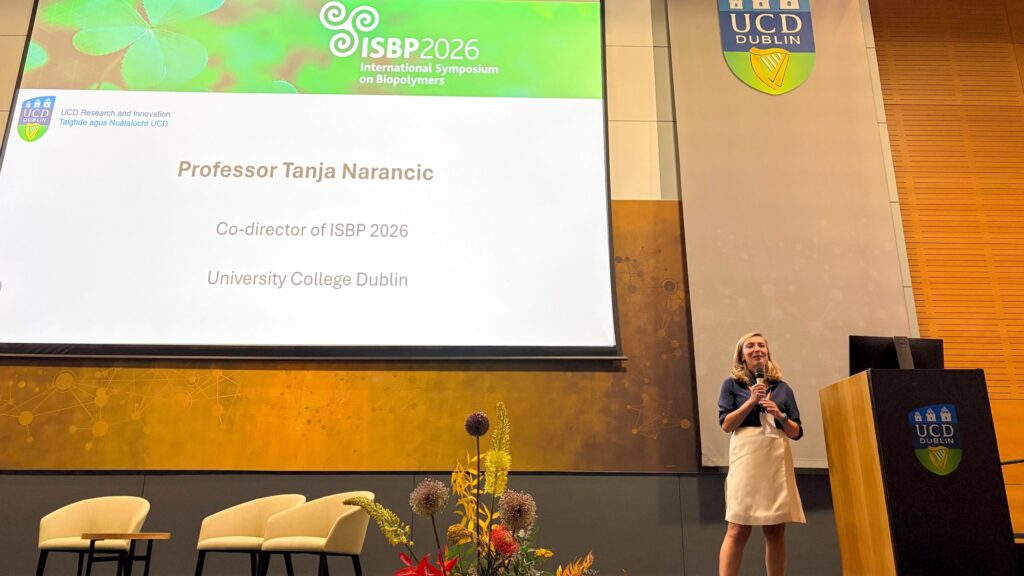
From the host institution, Rhys Orimaco of University College Dublin presented a poster on the production of 2,5-furandicarboxylic acid (FDCA) using a Pseudomonas umsongensis GO16-based biocatalyst, contributing to ongoing work on bio-based building blocks for future polymer systems. Kevin O’Connor and Tanja Narancic, who lead UPCYCLE’s activities at UCD, also attended the symposium.
Looking beyond ISBP 2026
Taken together, the contributions from DTU, BOKU, and UCD followed the route UPCYCLE is building, from using waste and residue streams as feedstock, to developing eco-designed bio-based materials, to assessing whether new solutions are truly more sustainable.
In a symposium that openly addressed both the potential of biopolymers and the challenges that still limit their wider adoption, these presentations illustrated how UPCYCLE approaches the topic from multiple angles, combining material development, biotechnology, recycling, sustainability assessment, and applications for sustainable packaging solutions. Sharing these perspectives with a community spanning research, industry, and policy helps ensure that project developments remain connected to the needs and expectations of the wider sector.