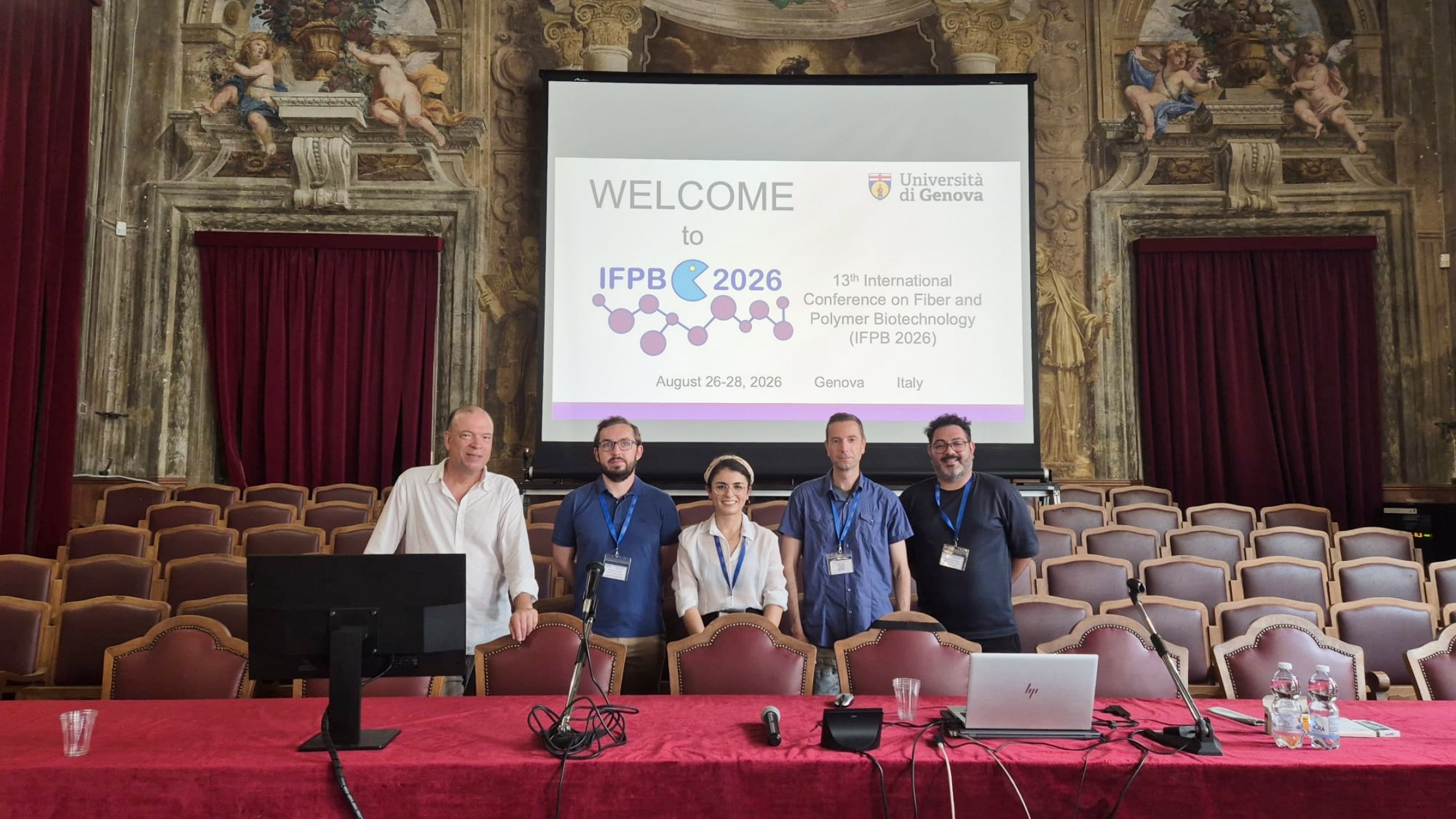
The UPCYCLE project took part in the 13th International Conference on Fiber and Polymer Biotechnology (IFPB 2026), held from 26 to 29 August in Genoa, Italy. Bringing together researchers, industry representatives, and technology developers, the conference explored how biotechnology and bioprocesses are shaping the future of fibres, polymers, and sustainable material systems.
Across the programme, discussions centred on topics such as enzymatic depolymerisation, polymer processing, microbial cell factories, and innovative approaches to material transformation. These themes provided the backdrop for exchanges on how biotechnology can support more circular and resource-efficient approaches to materials.
UPCYCLE perspectives across the programme
UPCYCLE was represented through contributions from several consortium partners, reflecting the project’s multidisciplinary approach to addressing the challenges of plastic waste and material circularity.
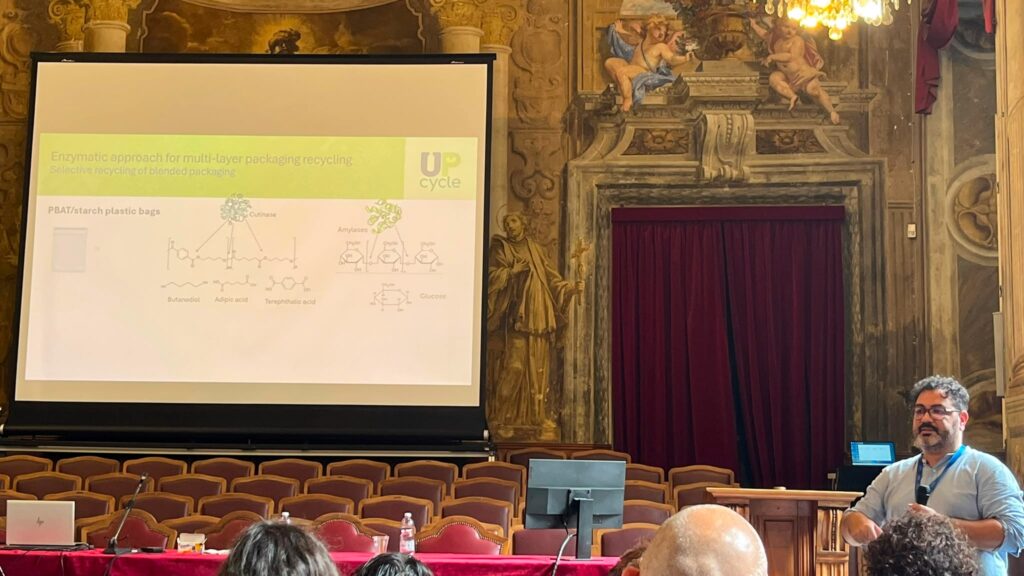
Representing Aalborg University, project coordinator Cristiano Varrone presented “Techno-economic considerations on plastic biorefineries”, exploring the challenges and opportunities associated with scaling biotechnological routes for the conversion of plastic-derived streams into valuable products. The presentation highlighted the importance of combining technological development with economic considerations when assessing future implementation pathways.
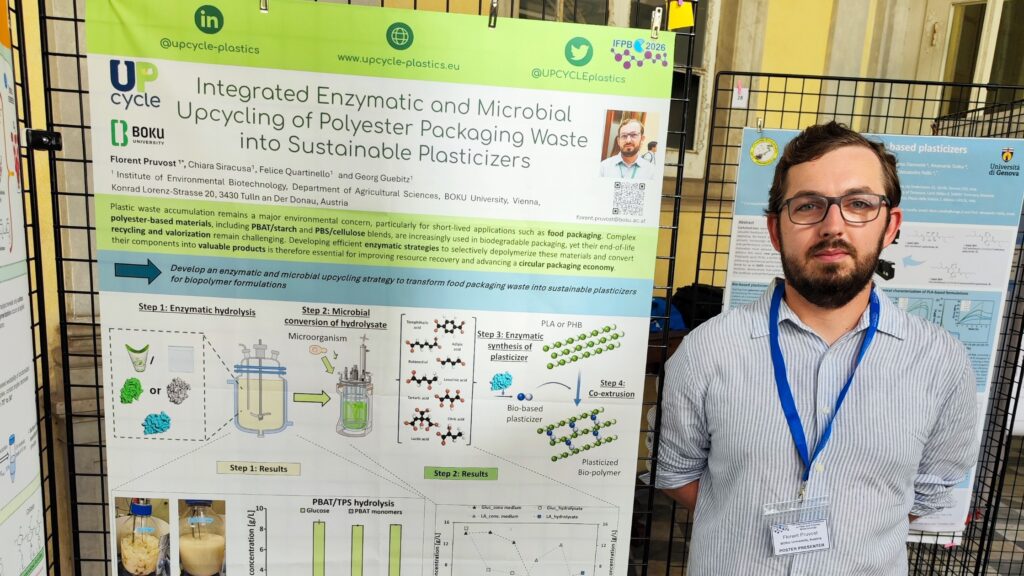
The conference also featured contributions from BOKU University, where Felice Quartinello and Florent Pruvost presented work on biotechnology-based approaches for polymer processing and transformation. Their contribution added a complementary perspective on the role of biological tools in creating more circular material systems.
Together, these presentations reflected the breadth of expertise within the UPCYCLE consortium, spanning technology development, process assessment, and biotechnology-driven solutions for polymer transformation.
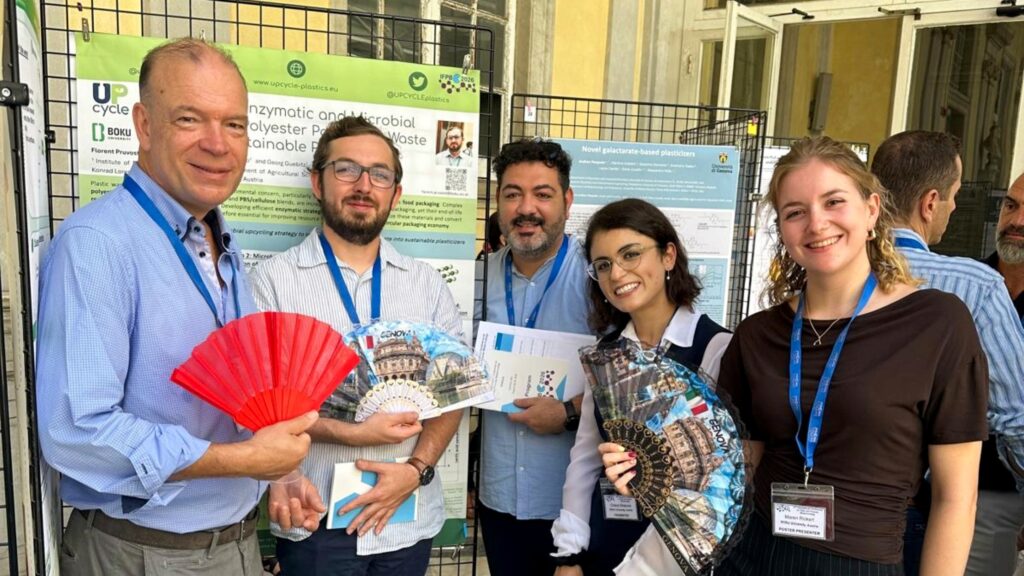
Connecting with the polymer biotechnology community
Beyond the presentations, IFPB 2026 provided an opportunity to engage with researchers and organisations working across the fibre, polymer, and biotechnology sectors. The event highlighted the growing interest in biological approaches to material production, recycling, and resource recovery, as well as the need to connect scientific advances with scalable solutions.
For UPCYCLE, participation in the conference reinforced the relevance of biotechnology in developing new pathways for plastics and contributed to ongoing discussions on how circular material systems can be designed, assessed, and implemented.