The UPCYCLE project was represented at the Advanced Recycling Conference 2025, held on 19–20 November 2025in Cologne, Germany. The conference brought together a diverse audience dominated by industry and commerce, alongside policy makers and scientists, reflecting the interdisciplinary nature of today’s recycling challenges.
UPCYCLE was represented by project partner Forschungszentrum Jülich, with Nick Wierckx delivering a presentation during the Biochemical Recycling Session. The session was very well attended, underlining the strong interest in biotechnological solutions for advanced plastic recycling.
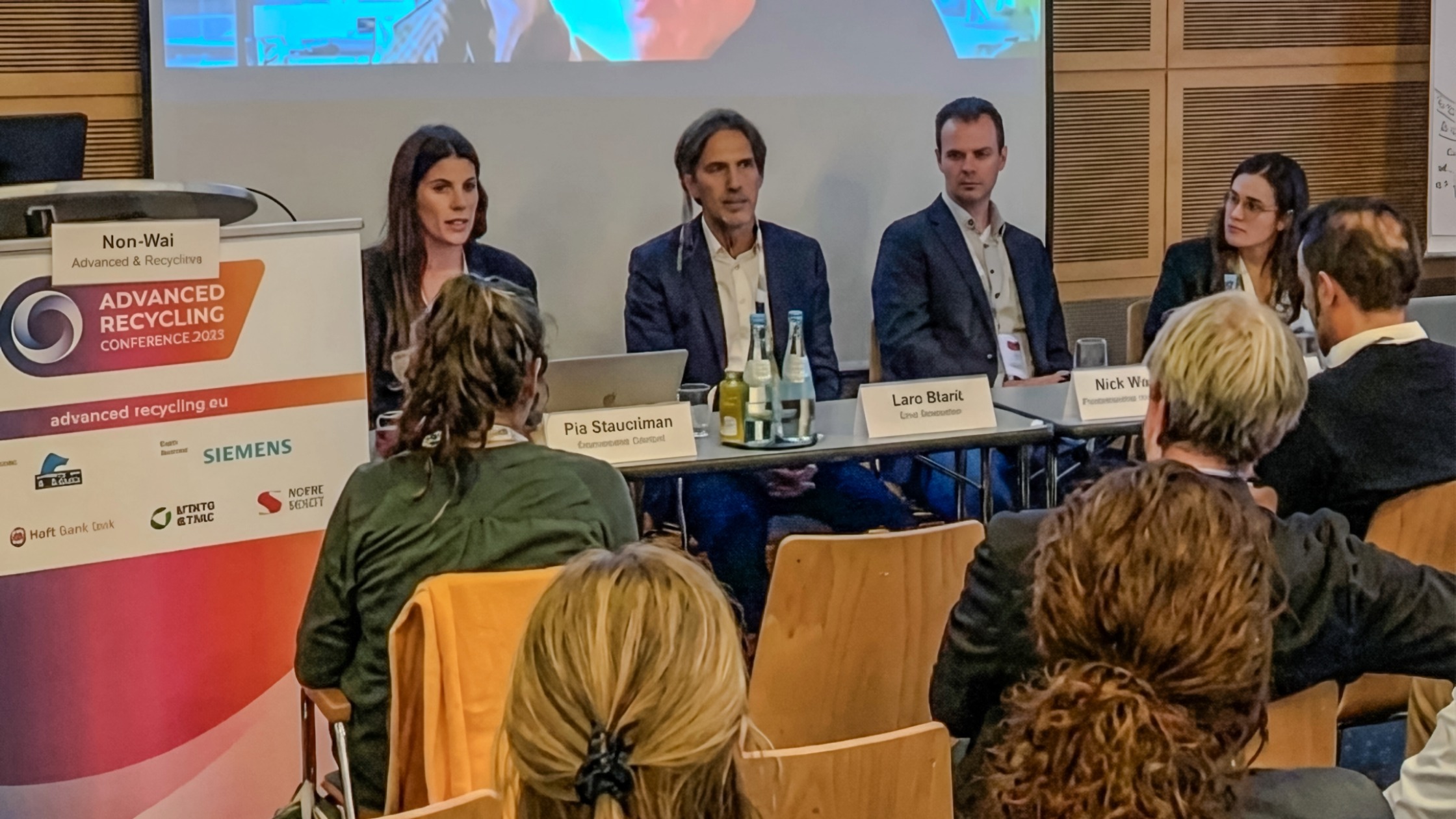
In his presentation, Nick Wierckx explored plastics bio-upcycling as an emerging and complementary pathway within the broader recycling landscape. The talk introduced key UPCYCLE concepts, with the project explicitly acknowledged at the conclusion of the presentation, showcasing its relevance within cutting-edge research on sustainable plastics management.
A central message resonated clearly with the audience: biotechnology offers additional and highly promising options for plastic recycling, particularly in areas where conventional approaches reach their limits. Two main routes were highlighted:
- Plastic depolymerisation (excluding polymers with C–C backbone bonds), and
- Upcycling of complex monomer mixtures into higher-value products.
To illustrate this potential, Nick Wierckx presented work on a hyper-engineered Pseudomonas strain capable of converting polyamide (PA) monomers into the bioplastic PHB, demonstrating how metabolic engineering can transform plastic waste into renewable materials.
The Advanced Recycling Conference addressed the rapid evolution of recycling technologies and the need for the sector to keep pace with ambitious EU recycling targets, industry commitments, and growing customer demand for circular solutions. Discussions throughout the event reflected ongoing debates on:
- Which recycling technologies are best suited to specific waste streams
- How to assess environmental impacts across diverse recycling pathways
- How to valorise waste streams that are currently under-recycled, despite strong demand for renewable feedstocks
The conference programme covered a broad spectrum of topics, including physical, chemical, biochemical, and thermochemical recycling, as well as carbon capture and utilisation (CCU), digital solutions, and pre- and post-treatment technologies. This comprehensive approach provided a valuable framework for comparing technologies and identifying synergies across the plastics value chain.